

Berlin is not a city you understand by collecting landmarks as quickly as possible.
You should see the Brandenburg Gate, the Reichstag, Museum Island and the remains of the Wall. But a good first visit also needs space for the contradictions between them: imperial buildings beside war memorials, socialist architecture beside reconstructed palaces, and quiet residential streets only a few stops from the busiest attractions.
This guide helps you decide what is genuinely essential, what can wait, and how to organise your first one, two or three days without spending the entire trip in transit.
The short answer: what should you see on your first trip to Berlin?
For most first-time visitors, these are the twelve places and experiences worth prioritising:
- Brandenburg Gate and Pariser Platz
- The Reichstag and the government quarter
- The Memorial to the Murdered Jews of Europe
- Unter den Linden and Bebelplatz
- Museum Island
- Berlin Cathedral and the Humboldt Forum
- The TV Tower and Alexanderplatz
- The Berlin Wall Memorial on Bernauer Strasse
- The East Side Gallery and Oberbaum Bridge
- The Topography of Terror and Checkpoint Charlie
- Tiergarten and the Victory Column
- At least one neighbourhood outside the historic centre
That list is not a one-day itinerary. Trying to complete it in a single day would show you Berlin’s transport network more clearly than the city itself.
| Comparison | Why it matters | Time to allow | Priority |
|---|---|---|---|
| Brandenburg Gate and Reichstag | The clearest introduction to modern German history and political Berlin | 2 to 3 hours with a dome visit | Essential |
| Museum Island and Unter den Linden | Architecture, Prussian Berlin and several major museums in one walkable area | 2 hours outside or half a day with one museum | Essential |
| Berlin Wall Memorial | The best place to understand how the Wall actually worked | 1.5 to 2.5 hours | Essential |
| East Side Gallery | The city's most famous surviving Wall section and open-air artwork | 45 to 90 minutes | High |
| TV Tower | A 360-degree overview of Berlin's scale and layout | 1.5 to 2 hours | Optional if the weather is poor |
| Checkpoint Charlie | A famous Cold War location with limited historic atmosphere today | 20 minutes, longer with nearby museums | Secondary |
| Charlottenburg Palace | A different side of Berlin focused on Prussian court history | Half a day | Best with three or more days |
1. Start at the Brandenburg Gate, but do not spend an hour there
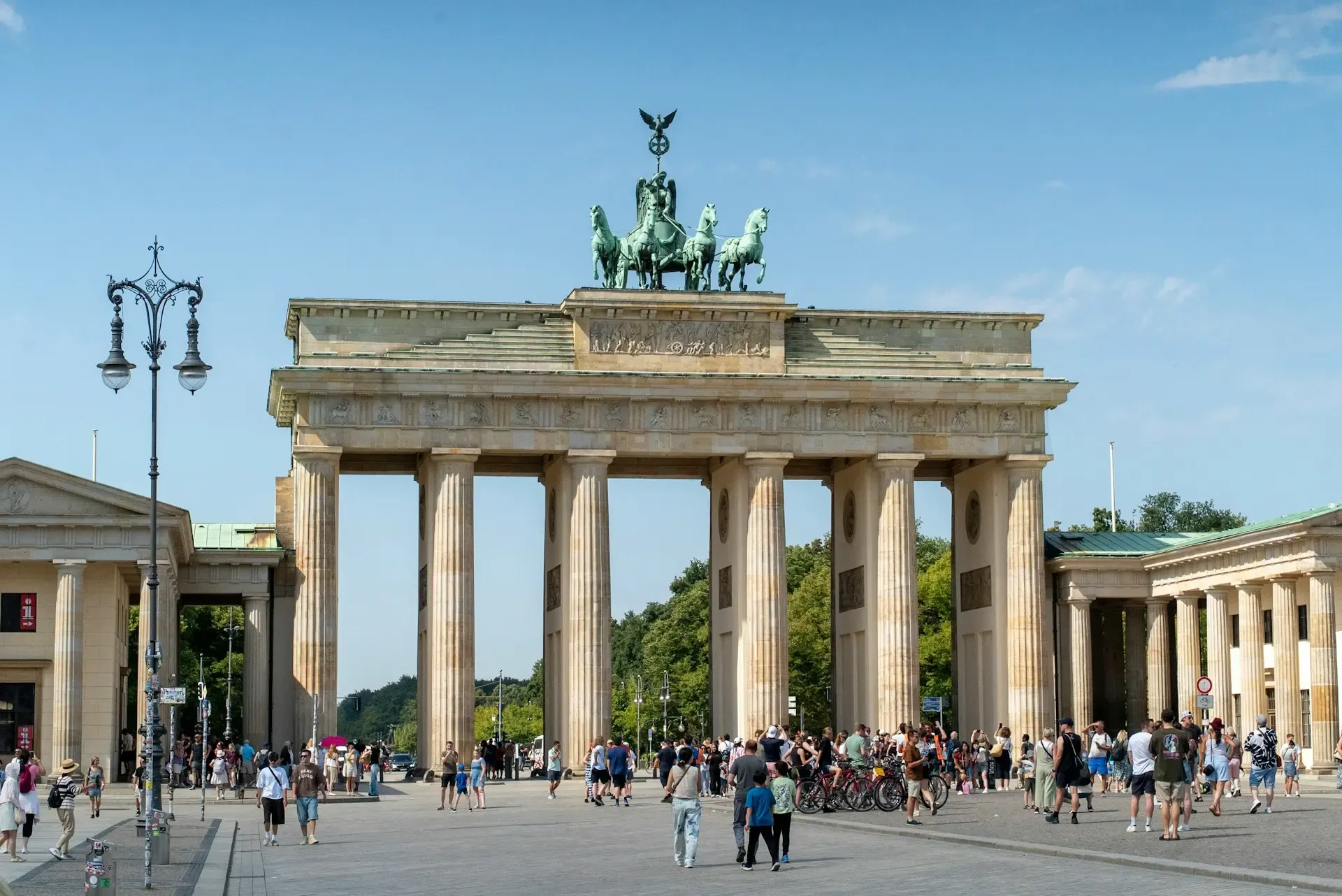
The Brandenburg Gate is the obvious first stop because several versions of Berlin meet in one place. It was a royal city gate, stood beside the Berlin Wall during the division of the city, and later became one of the strongest symbols of reunification.
Walk through the gate from Pariser Platz towards Tiergarten, then turn back to see the Quadriga above the columns. The square is busiest in the middle of the day, when tour groups, demonstrations, television crews and street performers often compete for the same space.
2. Visit the Reichstag dome and understand the government quarter
The Reichstag is one of Berlin’s best first-time experiences because it combines architecture, history, city views and the everyday work of Germany’s parliament.
The public can visit the roof terrace and glass dome free of charge, but advance registration is required. Bring the identification specified in your confirmation and leave time for security checks. The spiral walkway inside the dome gives you views over Tiergarten, the Brandenburg Gate, the Spree and the government buildings around Platz der Republik.
After the dome, walk behind the Reichstag towards the Spree. The Paul Löbe House, Marie-Elisabeth Lüders House and Federal Chancellery show a very different architectural language from the historic parliament building.
If you only want the dome, keep the free Bundestag registration. If you would rather have a guide explain the parliament district, political history and the Reichstag itself, these paid guided options are a different product rather than a replacement ticket for the free visit.
3. Give the Holocaust Memorial more attention than a quick photograph
The Memorial to the Murdered Jews of Europe stands one block south of the Brandenburg Gate. Its field of concrete stelae changes as you move through it. The ground drops, the blocks rise above you and the city briefly disappears from view.
Do not treat it as a maze, playground or backdrop for playful photographs. Walk through quietly, then visit the underground Information Centre when it is open. The exhibition adds names, families and individual stories to an abstract memorial that can otherwise be difficult to interpret.
4. Walk Unter den Linden instead of jumping straight to Alexanderplatz
Unter den Linden connects the Brandenburg Gate with the historic centre around Museum Island. The boulevard itself is not Berlin’s most charming street, but walking it reveals how political, royal, military and cultural institutions were arranged along the city’s old ceremonial axis.
On the way, stop at Bebelplatz. The square is best known for the 1933 Nazi book burning. A memorial by Micha Ullman is set into the ground, showing empty white shelves beneath a glass panel.
Nearby buildings include the State Opera, St. Hedwig’s Cathedral, Humboldt University and the Neue Wache memorial. Continue east towards the German Historical Museum, the Spree and Museum Island.
Berlin’s centre makes more sense on foot. The distance between its landmarks is where the history starts to connect.
If you want a guide for the historic centre
A walking tour makes the most sense here when you want the historical connections explained rather than simply being shown the landmarks. The options below cover slightly different priorities: a broad first-time overview, a shorter Third Reich and Cold War route, and a longer classic Berlin introduction.
5. Treat Museum Island as one major decision, not five small ones
Museum Island is a UNESCO-listed ensemble of five museum buildings beside the Spree. The architecture alone makes the area worth visiting, even when you do not enter a collection.
For a first trip, walk from the Lustgarten towards the Bode-Museum and choose one museum based on your interests:
- Neues Museum: The strongest all-round first choice for Egyptian history, the bust of Nefertiti and the restored building.
- Alte Nationalgalerie: Best for nineteenth-century painting, German Romanticism and Impressionism.
- Altes Museum: Best for Greek, Etruscan and Roman antiquity.
- Bode-Museum: Best for sculpture, Byzantine art and a quieter atmosphere.
The Pergamonmuseum is fully closed for renovation. Major sections are scheduled to reopen on 4 June 2027.
If the Neues Museum is your one museum, the individual entry ticket is the cleaner choice. The multiple-museum ticket only becomes interesting when you have deliberately set aside most of a day for two or more open collections.
6. Choose between Berlin Cathedral and the Humboldt Forum
Berlin Cathedral and the Humboldt Forum face each other across the Lustgarten and the Spree. They are easy to combine, but most first-time visitors do not need a full visit inside both on the same day.
Berlin Cathedral
The cathedral offers an ornate interior, the Hohenzollern crypt and a dome walkway with views over Museum Island and central Berlin. Visits can be affected by services, concerts and other events, so check the daily schedule rather than relying only on general opening hours.
Allow around 90 minutes for a full visit.
Humboldt Forum
The Humboldt Forum occupies a reconstructed version of Berlin’s former royal palace, combined with a modern eastern facade. Its exhibitions cover art, culture and Berlin’s relationship with the wider world. Some spaces are free while others require tickets.
The building is useful even for a shorter stop. Walk through the central passage, look across the Spree and consider the contrast between the reconstructed palace facades and the modern interior.
A good alternative when you need a break from walking
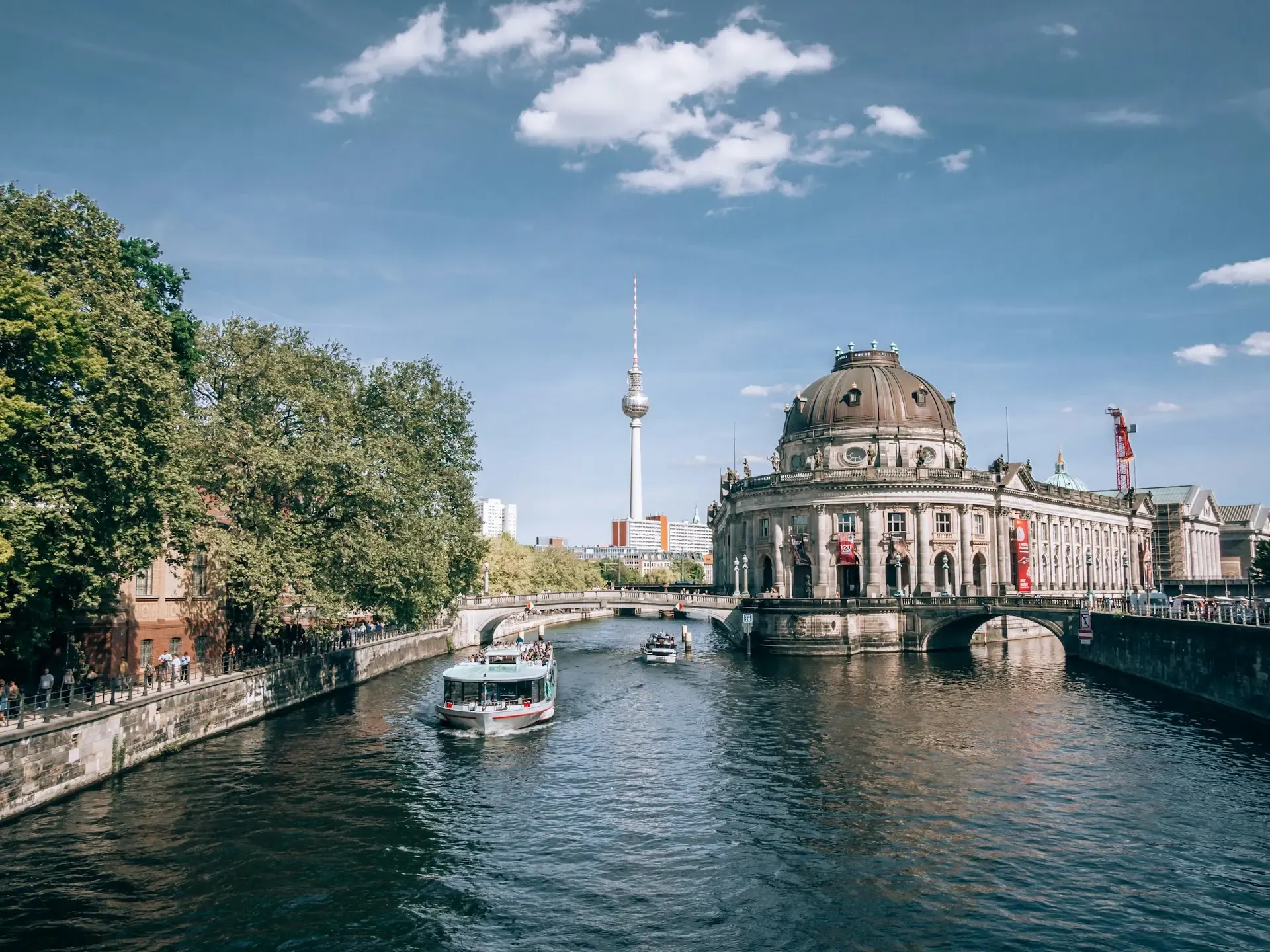
A Spree sightseeing cruise works well from this part of the city because many routes pass the cathedral, Museum Island and the government quarter. I would treat it as a relaxing second perspective on central Berlin, not as a substitute for walking through the historic centre.
See the 2.25-hour Spree sightseeing cruise.
Another alternative when you need a break from walking
7. See Alexanderplatz, then decide whether the TV Tower is worth the ticket
Alexanderplatz is not beautiful in a conventional sense. That is precisely why it belongs on a first visit. The square shows the scale, transport infrastructure and socialist-era architecture of former East Berlin more clearly than the restored historic streets nearby.
Look for the World Time Clock, the broad open square and the TV Tower rising behind the station. Then walk a few minutes towards the quieter Marx-Engels-Forum or the river.
The TV Tower observation deck is 203 metres above the city and provides a 360-degree view. Tickets are tied to a time slot and can be booked up to 90 days ahead. The experience works best in clear weather, when Berlin’s flat geography becomes visible in every direction.
Booking the TV Tower
For most first-time visitors, the standard observation-deck ticket is enough. The Sphere breakfast is a more expensive experience for travellers who specifically want to combine the view with a meal. Check the weather before committing to either.
8. Go to the Berlin Wall Memorial to understand the Wall properly
The Berlin Wall Memorial on Bernauer Strasse is the best place in the city to understand the physical structure and human consequences of the border.
Unlike the East Side Gallery, this site preserves and explains the border strip, watchtower system, escape stories, demolished buildings and the division of a living neighbourhood. The outdoor exhibition stretches along Bernauer Strasse, while the Documentation Centre provides a higher viewpoint over a preserved section of the former border grounds.
The outdoor memorial grounds are open daily, and admission to the site and exhibitions is free.
9. Walk the East Side Gallery and continue to Oberbaum Bridge
The East Side Gallery stretches for more than 1.3 kilometres along a surviving section of the Berlin Wall. Artists from many countries painted the east side of the Wall in 1990, transforming a structure of control into an open-air gallery.
Start near Ostbahnhof and walk towards Oberbaum Bridge, or do the route in reverse from Warschauer Strasse. Famous murals attract clusters of visitors, but the quieter works and the river side of the Wall are also worth noticing.
The gallery is open around the clock and admission is free. The visitor information centre has more limited daily hours.
If Berlin Wall history is one of your main interests
These two tours make more sense than a generic city tour if your priority is the divided city. One combines Wall history with the East Side Gallery; the other concentrates on escape stories, the former border strip and the Berlin Wall Memorial.
10. Pair Checkpoint Charlie with the Topography of Terror
Checkpoint Charlie is famous, central and easy to visit. It is also surrounded by souvenir shops, staged imagery and commercial attractions that can make the historical site feel thinner than expected.
Stop briefly to understand its role as a crossing point between the American and Soviet sectors, then continue along Zimmerstrasse and Niederkirchnerstrasse towards the Topography of Terror.
The Topography of Terror stands on the former site of central institutions of Nazi persecution and terror. Its exhibitions are free and open daily. The indoor documentation centre and surviving section of the Berlin Wall outside make this a much more substantial historical visit than Checkpoint Charlie alone.
If Nazi-era history is a major reason for your trip, a specialist route is more useful than another general highlights tour. This Third Reich and WWII walking tour includes the Reichstag, Holocaust Memorial, Hitler bunker site and locations connected with the Nazi state.
11. Use Tiergarten as a break, then climb the Victory Column if you still want a view
Tiergarten sits between the Brandenburg Gate, the government quarter, Potsdamer Platz and City West. It is less a single attraction than a useful change of pace after museums and memorials.
Walk from the Brandenburg Gate through the park towards the Victory Column, or explore the quieter paths closer to the Spree. The Victory Column provides an open-air view across the park and towards central Berlin, but reaching the platform involves a long spiral staircase.
12. Leave Mitte and spend time in one real neighbourhood
A first trip made entirely of major monuments can leave Berlin feeling formal, grey and strangely empty. The city becomes more understandable when you spend an evening or half-day in a neighbourhood where people live, eat, shop and meet friends.
| Comparison | Best for | What to combine it with |
|---|---|---|
| Kreuzberg | Food, nightlife, Landwehr Canal and a more energetic street atmosphere | Topography of Terror, Jewish Museum or East Side Gallery |
| Friedrichshain | East Berlin architecture, bars and the streets around Boxhagener Platz | East Side Gallery and Oberbaum Bridge |
| Prenzlauer Berg | Cafes, restored nineteenth-century streets and a calmer evening | Berlin Wall Memorial and Mauerpark |
| Charlottenburg | City West, elegant residential streets and traditional West Berlin | Charlottenburg Palace, Kaiser Wilhelm Memorial Church and Kurfürstendamm |
For most visitors, Kreuzberg or Prenzlauer Berg is the easiest contrast with central Mitte. Friedrichshain fits naturally after the East Side Gallery. Charlottenburg deserves more time when you are already planning to explore City West.
Two worthwhile additions when you have more than three days
Charlottenburg Palace and its gardens
Charlottenburg Palace shows a side of Berlin that the twentieth-century history route barely touches. The Old Palace, New Wing and gardens introduce Prussian royal life and a more decorative architectural style than central Mitte.
The palace buildings are closed on Mondays and use seasonal opening hours. The gardens are free and generally open from morning until dark.
Allow at least half a day, especially when combining the palace with Kurfürstendamm, Savignyplatz or the Kaiser Wilhelm Memorial Church.
If you decide to make Charlottenburg your third-day priority, you can check Charlottenburg Palace entry availability here.
Tempelhofer Feld
The former Tempelhof Airport airfield is now one of Berlin’s most unusual public spaces. People cycle on old runways, meet for picnics, fly kites and garden beside the vast terminal building.
It is not an essential historical sight for a very short first trip, but it is one of the clearest examples of how Berlin reuses large spaces rather than polishing every part of the city into a conventional attraction.
A realistic one-day Berlin itinerary
One day is enough for a strong introduction, not a complete visit. This route prioritises central history and avoids unnecessary transport.
| Time | Plan |
|---|---|
| 08:30 | Start at the Brandenburg Gate and walk around Pariser Platz before the busiest part of the day. |
| 09:15 | Visit the Reichstag dome if you secured a morning reservation. Otherwise walk through the government quarter. |
| 11:00 | Visit the Memorial to the Murdered Jews of Europe and continue towards Bebelplatz. |
| 12:30 | Stop for lunch around Friedrichstrasse, Hackescher Markt or the streets north of Museum Island. |
| 14:00 | Walk across Museum Island. Enter one museum only when it is your main priority. |
| 16:30 | Continue to Alexanderplatz and decide whether conditions justify a TV Tower visit. |
| 18:30 | Take the S-Bahn to Warschauer Strasse or Ostbahnhof and walk part of the East Side Gallery. |
| 20:00 | Finish with dinner in Friedrichshain or Kreuzberg rather than returning immediately to the historic centre. |
If you have limited mobility, are travelling with young children or simply do not want a long walking day, a hop-on hop-off sightseeing bus can be a practical alternative. It is less immersive than walking the centre, but it reduces the amount of route planning.
What to see in Berlin in two days
Day one: Historic centre and political Berlin
Follow the Brandenburg Gate, Reichstag, Holocaust Memorial, Unter den Linden, Museum Island and Alexanderplatz route. Reserve the Reichstag in advance and choose either one museum or the TV Tower, not both, unless you are comfortable with a tightly scheduled day.
Day two: The Wall and Berlin beyond the landmarks
Start at the Berlin Wall Memorial on Bernauer Strasse. Continue to Prenzlauer Berg for lunch, then travel to the East Side Gallery. Walk towards Oberbaum Bridge and finish in Friedrichshain or Kreuzberg.
Visitors more interested in Nazi history can replace Prenzlauer Berg with the Topography of Terror and a short Checkpoint Charlie stop.
What to see in Berlin in three days
Three days lets you slow down and choose according to your interests.
Day one
Historic centre, Reichstag and Museum Island exterior.
Day two
Berlin Wall Memorial, East Side Gallery and a neighbourhood evening.
Day three
Choose one of these combinations:
- Museums and architecture: One Museum Island collection, Berlin Cathedral or Humboldt Forum, then Hackescher Markt.
- City West: Charlottenburg Palace, Kurfürstendamm and the Kaiser Wilhelm Memorial Church.
- Modern history: Topography of Terror, Checkpoint Charlie and the Jewish Museum.
- A slower Berlin day: Tiergarten, Victory Column and cafes or shops in Charlottenburg.
Tickets and reservations to organise before your trip
Getting around Berlin on a first visit
Berlin is too large to explore only on foot, but central sights often work best in connected walking routes. Use public transport to move between areas, then walk once you arrive.
Accessibility notes for the main sights
What can you skip on a first visit?
You do not need to remove these places forever. They simply have a lower priority when time is limited.
Potsdamer Platz
It is historically important and useful as a transport point, but much of the present-day square feels more like a business and entertainment district than an essential Berlin experience. Visit it when combining the Holocaust Memorial, Topography of Terror or Kulturforum.
A full Kurfürstendamm shopping day
City West is worth seeing, especially around the Kaiser Wilhelm Memorial Church and Savignyplatz. Spending most of a short first trip in international shops is less distinctive unless shopping is one of your main goals.
Several museums in one day
Berlin’s museums are large, and many deal with demanding subjects. Two carefully chosen museums across a three-day visit will usually leave a stronger impression than five rushed collections.
Every famous currywurst queue
Try Berlin street food when it fits your route. Do not cross the city and wait a long time because one stand appears in every guidebook. The experience rarely justifies losing an hour of sightseeing.
Final recommendation
A good first Berlin trip should contain four things: the historic centre, one serious encounter with the city’s twentieth-century history, one museum or viewpoint, and time in a neighbourhood that still feels lived in.
See the Brandenburg Gate, but continue to the Reichstag and memorials around it. Walk Museum Island, but choose one collection. Photograph the East Side Gallery, but visit Bernauer Strasse to understand the Wall. Then leave Mitte for dinner, a canal walk or an ordinary residential street.
That balance gives you a much better introduction than a checklist of twenty attractions.
Frequently asked questions
How many days do you need for a first trip to Berlin?
Three full days is the best balance for the main sights, one museum and at least one neighbourhood. Two days works when you prioritise carefully, while one day is only enough for a focused introduction.
What is the number one sight to see in Berlin?
The Brandenburg Gate is the city's most recognisable landmark, but the strongest first-time experience is the complete area around it, including the Reichstag, government quarter and nearby memorials.
Is the Reichstag dome free?
Yes. Public visits to the roof terrace and dome are free, but advance registration and identification are required.
Is the Pergamonmuseum open?
No. The Pergamonmuseum is closed for renovation. Major sections are scheduled to reopen on 4 June 2027.
Which is better, the East Side Gallery or the Berlin Wall Memorial?
Choose the East Side Gallery for murals and a riverside walk. Choose the Berlin Wall Memorial on Bernauer Strasse for the clearest explanation of how the border worked and how it affected daily life. First-time visitors with enough time should see both.
Is Checkpoint Charlie worth visiting?
It is worth a short stop because of its historical fame, but the modern site is commercial and visually reconstructed. Pair it with the nearby Topography of Terror for a much more substantial history visit.
Do you need the Berlin WelcomeCard?
Not automatically. Compare the price with the ordinary transport tickets you would use and the discounts you genuinely plan to claim. A standard 24-hour or multi-day transport ticket can be simpler when you are visiting mostly free sights.
Can you see Berlin without booking attractions in advance?
Yes, because many major sights and memorials are free and outdoors. The two reservations most likely to shape a first trip are the Reichstag dome and a timed TV Tower visit.
What is the best area to stay for a first visit?
Mitte is the most convenient for the historic centre, but areas around Friedrichshain, Kreuzberg, Prenzlauer Berg and Charlottenburg can offer better evening atmosphere. Prioritise a hotel near an S-Bahn or U-Bahn station rather than choosing only by district name.
Related guides
Sources
- visitBerlin: official overview of Berlin's top sights (opens in a new tab)
- German Bundestag: registration for the Reichstag dome (opens in a new tab)
- German Bundestag: accessibility information (opens in a new tab)
- Staatliche Museen zu Berlin: current museum opening hours (opens in a new tab)
- Staatliche Museen zu Berlin: Pergamonmuseum reopening announcement (opens in a new tab)
- Berlin TV Tower: official ticket information (opens in a new tab)
- Berlin TV Tower: opening hours, timed tickets and visitor FAQ (opens in a new tab)
- Berlin TV Tower: limited accessibility information (opens in a new tab)
- Berlin Wall Foundation: Berlin Wall Memorial visitor information (opens in a new tab)
- Berlin Wall Foundation: East Side Gallery visitor information (opens in a new tab)
- Memorial to the Murdered Jews of Europe: Information Centre (opens in a new tab)
- Topography of Terror: directions, opening hours and admission (opens in a new tab)
- Berlin Cathedral: official visitor information (opens in a new tab)
- Humboldt Forum: official prices, tickets and opening hours (opens in a new tab)
- Prussian Palaces and Gardens: Charlottenburg Palace Old Palace (opens in a new tab)
- BVG: Berlin fare zones and tariff information (opens in a new tab)
- BVG: current 24-hour ticket prices (opens in a new tab)
- BVG: travelling between BER Airport and central Berlin (opens in a new tab)
Related guides
This article contains affiliate links. If you book through them, we may earn a commission at no extra cost to you.Affiliate disclosure